
The evidence, explained
Three water figures answer different questions. The posted 2023 agreement’s Tier III table lists 1.5 million gallons for an average day and a 2.5-million-gallon daily capacity allocation. EPWater’s newer public explanation estimates approximately 480,000 gallons per day of average use and describes 2.5 million as an extreme-heat maximum. Contractual capacity, modeled average use and actual metered consumption must remain separate. Water agreement, Exhibit B; EPWater’s Meta Q&A.
The agreement offers substantial service protections, but describing the project as categorically exempt from drought constraints overstates its text. Section 5(a) contains public-health and applicable-law qualifications; drought-related meter approval and consent to reservation reductions address different matters. EPWater separately says ordinary drought restrictions apply. A complete public explanation should show both the contract and the utility’s interpretation rather than imply that their relationship has been conclusively resolved. Water agreement, section 5(a); EPWater Q&A.
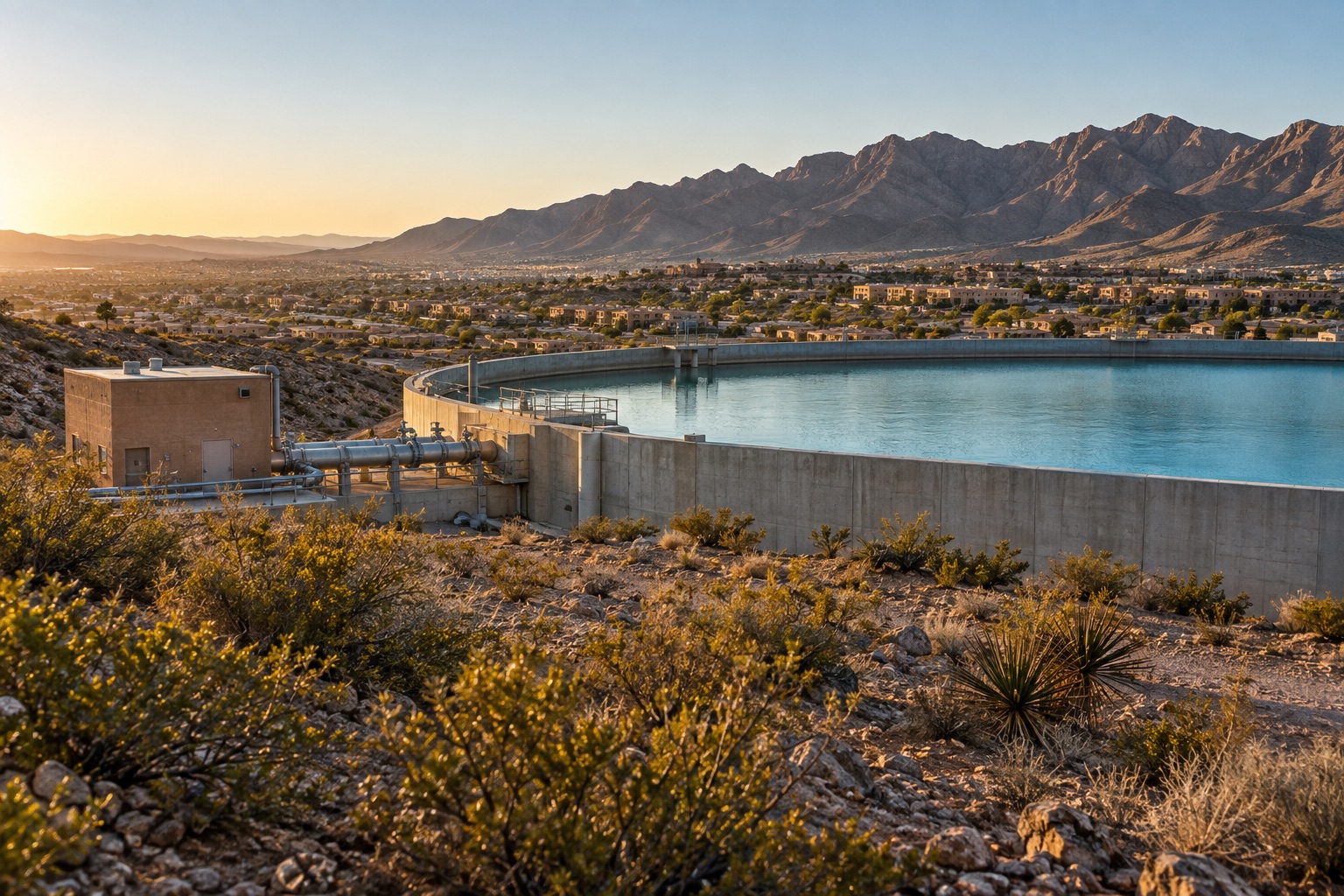
EPWater says the project pays the rates applicable to very large water users. A nominal consideration amount in a service agreement is not the price of the water delivered. The utility says Texas law prohibits it from publicly disclosing an individual customer’s use and that public disclosure would be at Meta’s discretion. Its statement that it had not received a conservation plan as of July 2026 should retain that date; it is not proof that no plan exists in September. EPWater Q&A.
Cooling terminology can obscure water demand. A closed internal loop can transfer heat to equipment that evaporates water outside that loop. Other designs reject heat primarily to air and use little or no water for cooling, potentially with different energy requirements. Water treatment, sanitation and electricity generation can add other demands. The relevant questions are the actual cooling configuration, seasonal consumption, water source and efficiency measured under El Paso conditions. U.S. Department of Energy’s cooling-water guidance.
Meta’s August 2026 explanation of closed-loop cooling describes its technology broadly. Microsoft has also announced a design avoiding water consumption for cooling in new facilities. Neither establishes the equipment installed or annual water performance at El Paso. Project-specific plans and measured results are needed before making technology comparisons. Meta’s cooling explanation; Microsoft’s design announcement.
Water replenishment also differs from reducing withdrawals at a campus. Restoration or conservation projects may provide benefits, but the accounting requires location, timing, additionality and verification. A company’s aggregate replenishment goal does not automatically establish a gallon-for-gallon offset in the aquifer or season affected by a particular site. Meta’s water program.
El Paso’s wider water strategy includes conservation, groundwater management, desalination and reuse. EPWater currently describes its Pure Water Center as a roughly $290 million project planned to begin operation in 2029 with capacity for 10 million gallons per day. Those are utility plans, not present supply, and the facility should not be portrayed as available today or dedicated to Meta. USGS groundwater research provides historical aquifer evidence but does not, by itself, forecast this campus’s marginal effects. EPWater’s Pure Water Center; USGS Hueco Bolson investigation.
Questions still worth asking
- What project-specific cooling equipment will operate under El Paso’s summer conditions?
- What conservation plan and agreement amendments are currently in effect?
- What lawful, consistent reporting can show actual seasonal consumption?